


Arthropathy, more accurately known as osteoarthrosis, is a chronic disease of a nutritional nature, caused by the destruction of cartilage tissue in the joints, making its treatment extremely necessary.When this disease occurs, the tissue at the end of the bones and around the joints begins an irreversible inflammatory process that causes them to degenerate.In addition, arthropathy refers to many other degenerative joint diseases that are characterized by many similar mechanisms of onset and progression.
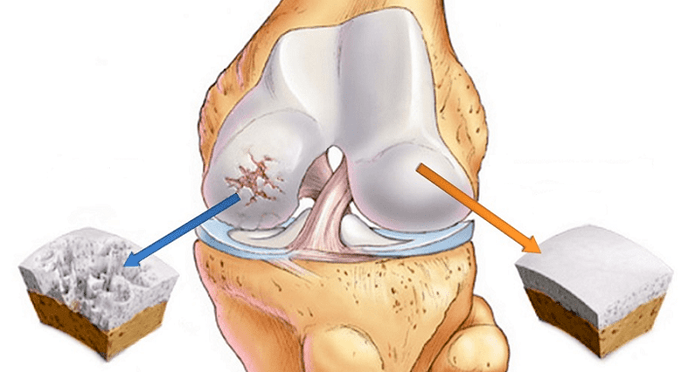
According to various statistics, arthropathy affects up to 80% of the planet's inhabitants, making it the most commonly diagnosed joint disease.It ranks third among all diseases.
The older a person is, the higher the chance of developing joint disease.Both genders are equally susceptible to the condition, except for interphalangeal joints, which occur most often in women.The working population over 30 years old is most affected.The proportion of patients increases year by year.
Causes of joint disease
The occurrence and causes of arthropathy are accompanied by the deterioration of joint metabolism, resulting in the loss of elasticity of cartilage tissue.The cause may be a complete or incomplete loss of proteoglycans in the cartilage, which usually occurs due to severe cracks in the cartilage.Loss of these complex proteins may also occur due to the destruction of proteins produced by joint cells.
According to experts, cartilage destruction can be caused by: hormonal imbalances, worsening blood flow to the joints, worsening metabolism, genetic causes, mature age, injuries and other diseases, including rheumatoid arthritis and lichen planus.However, the most important cause of joint disease is excessive stress placed on the joints at a time when they are most vulnerable.
Other causes of joint arthritis include:
- previous injury;
- being overweight;
- Inflammation caused by severe septic arthritis;
- Poor daily diet;
- low temperature;
- Liebmann-Sachs disease;
- systemic poisoning;
- Frequent colds;
- Syphilis, tuberculosis, purulent inflammation of the urinary tract, tick-borne meningoencephalitis in spring and summer;
- Thyroid disease;
- Chronic bleeding (hemophilia);
- Osteochondrosis of the femoral head.
Causes of osteoarthritis are hereditary:
- Arthropathies of the bones and fingers may be hereditary;
- Dysplasia - due to abnormalities in the joint and ligament development process that occurs in the womb - leading to joint wear and arthrosis;
- Pathogenic changes in type 2 collagen – when the fibrin of connective tissue is damaged.
People engaged in the following occupations or hobbies are most susceptible to the disease: masons, fishermen, blacksmiths, loaders, athletes.
Arthropathy symptoms caused by various causes
Symptoms of arthrosis can be divided into four groups:
- Painful in nature. The appearance of pain first indicates the first symptoms of arthropathy.Pain can be caused by many things, but arthropathy is a special case.First, the pain is characterized by severe pain, and you may feel some discomfort during activities.The pain will go away after rest.I only feel pain when I turn around at night.At rest, the pain becomes constant only in severe cases of the disease.In the initial stages of the disease, pain is felt only with force or palpation.As the condition worsens, the pain increases and requires more and more rest to resolve.In severe cases, the pain becomes unbearable and osteophytes develop due to thinning of the cartilage and exposure of the bone.Bad weather and a full moon can worsen the pain.
- A crunching sound occurs.Such symptoms are also very important in diagnosis.It occurs due to friction between rotating bones, where the ends of the bones lose their softness and elasticity.Tightness may indicate other diseases, or may not be accompanied by other diseases at all, but for arthropathy it has a special feature, characterized by its "dryness".This causes pain.
- Deterioration of joint movement function.This symptom is typical of advanced stages of arthrosis and occurs when bone tumors develop in the joints, causing them to spasm and almost completely fill the joint space.The result is partial immobilization of the joint.
- Joint deformities.The shape of the joint changes due to the growth of osteophytes on the bones and the entry of synovial fluid into the joint.This symptom is characteristic of the most advanced forms of the disease.
Arthropathy can alternately move from a state of exacerbation to remission, which greatly interferes with diagnosing the disease on your own.For this reason, it is recommended to consult a doctor for a clear diagnosis.
Through X-rays, doctors will be able to identify signs that indicate one of the four stages of arthrosis:
- Stage 1: The joint space may be slightly narrowed; no osteophytes are observed.
- Stage 2.The lumen reduction may be more pronounced and osteophytes begin to form.
- The third stage.Luminal narrowing was evident and numerous osteophytes were present.
- Stage 4: The joint cavity almost completely disappears, and the shape of the joint begins to undergo pathological changes due to a large number of osteophytes.
Treatment methods for joint disease
Treatment of joint disease is best initiated early in its development and should be comprehensive and specific to the cause.The goal of treatment should be to eliminate the causes of the disease.In addition, it is necessary to eliminate the pathogenic changes caused by inflammation and restore the function of the joints.
A comprehensive approach to treating joint disease includes the use of medications and physical therapy measures.Health resort treatments are possible because in some cases the climate, mineral waters and mud can produce effective results.
Treatment of joint arthritis includes many basic principles:
- Affected joints should not be subject to excessive stress, and these stresses should be virtually non-existent during treatment;
- Follow orthopedic doctor’s orders;
- engage in recreational sports activities;
- Perform physical therapy, including laser, shock wave, and electromagnetic therapy;
- Undergo treatment at a health resort at least once a year as prescribed by your doctor;
- Oxygen therapy – supplying oxygen to the inside of joints;
- drug treatment;
- Methods of intraosseous drug delivery and epiphyseal decompression;
- Establish proper nutrition.
Pharmacological treatment includes the following medications:
- Anti-inflammatory drugs.With a comprehensive approach, you can not only stop the progression of the disease, but also make your life easier to a certain extent.In part, the goal of medication is to eliminate pain and inflammation within the joint.For this, nonsteroidal drugs are used.Experts advise against taking these medications by mouth because they can cause quite severe stomach pain.In this regard, depending on the specific drug, intravenous or intramuscular injection is used.Other methods, such as ointments, are actually not used as they are minimally effective.
- Hormones corticosteroids.Such drugs are prescribed in case of worsening of the disease.Medication is injected into the joint.For topical use, patches, tinctures, or ointments may be used.
- Chondroprotectant.Used to repair cartilage tissue and improve the quality of synovial structures.Among these drugs, glucosamine and chondroitin sulfate are most often preferred.The duration of this course can be lengthy before improvement occurs.However, if the desired results are not observed within six months, such drugs should no longer be taken.In addition, along with chondroprotectants, it is recommended to inject hyaluronic acid-added drugs into the joints.This class of drugs helps the formation of cartilage cells in joints.
In particularly severe cases, the prescription of narcotic analgesics is not excluded.But this drug is rarely used, only when other drugs don't have the desired effect.
Proper nutrition for joints
Proper nutrition plays an important role in disease progression.It must be balanced.You can't eat less, but you can't eat too much either.Due to excess weight, the load on the joints increases, and in the case of malnutrition, the cartilage tissue lacks important trace elements, leading to cartilage tissue degeneration.However, the most important thing is to develop a diet that will help you lose those extra pounds.You need to give up fast carbohydrates in sweets and flour products.In addition, the consumption of alcoholic beverages, especially beer, is prohibited.
Fish dishes are welcome with almost no restrictions.Only fatty varieties should be avoided - due to their high caloric content, you may gain weight again.
Aspic is especially valuable in the treatment of joint diseases.This may seem strange, but all doctors without exception recommend its use because it contains a large number of different trace elements.The collagen in aspic is useful because it is a component of connective tissue, so in this case it is able to replenish the missing amount in the body.As a result, the joints gain better mobility and the cartilage tissue becomes more elastic.
Vitamins, especially B vitamins, play an important role in this disease for the entire body.It is this group that normalizes metabolic processes in the human body.A properly functioning metabolism will keep your joints feeling great.When thiamine enters the body from beans or peas, it accelerates the synthesis of protein, fat, and carbohydrates.
To increase hemoglobin, you need pyridoxine, which can be obtained from bananas, nuts, potatoes, and cabbage.It is recommended to pay attention to vegetables and legumes - they contain folic acid.The body also needs liver, mushrooms, eggs and fermented dairy products.Of course, all vitamins are included in vitamin complexes, but it is known that natural elements are better absorbed, which means the healing process will be faster and more effective.
When eating, you should follow basic simple rules:
- Avoid eating hard-to-digest foods before bed as they can trigger joint problems;
- Food should be eaten more frequently but in smaller amounts;
- Always monitor your weight and don’t let it increase, otherwise it will ensure that the joints are overloaded. Buy a good weight loss and weight control product;
- Take a walk during remission after eating;
- Your daily diet should be balanced and formulated with your doctor.
It is very important to seek help from a doctor promptly.By following some of his instructions, you can not only stop the progression of joint disease, but also reverse it, which will give you a chance to enjoy a normal life again.